Ever wonder why so many teams miss their targets? Vague objectives and unclear success metrics often lead to confusion, wasted effort, and unfinished projects. Without a shared definition of what “done” looks like, even motivated groups struggle to align priorities and resources effectively.
That’s where structured frameworks shine. By breaking aspirations into specific, measurable, and time-bound components, teams gain clarity on what matters most. This method helps identify mismatches between ambitions and available tools early, saving time and frustration.
Imagine transforming “improve sales” into actionable steps with deadlines, assigned roles, and progress markers. This approach doesn’t just apply to workplaces—it works for personal growth too. Whether launching a product or learning a skill, clear criteria turn abstract ideas into achievable results.
Key Takeaways
- Traditional goal-setting often fails due to unclear definitions of success
- Vague objectives lead to wasted resources and missed deadlines
- Structured frameworks create alignment across teams and priorities
- Breaking goals into smaller criteria reveals hidden challenges early
- This method applies equally to professional and personal growth
Understanding the SMART Goals Framework
Clarity in objectives separates wishful thinking from real results. A proven method for creating actionable plans combines five essential elements into one cohesive system. This approach turns foggy aspirations into step-by-step roadmaps.
What Does SMART Stand For?
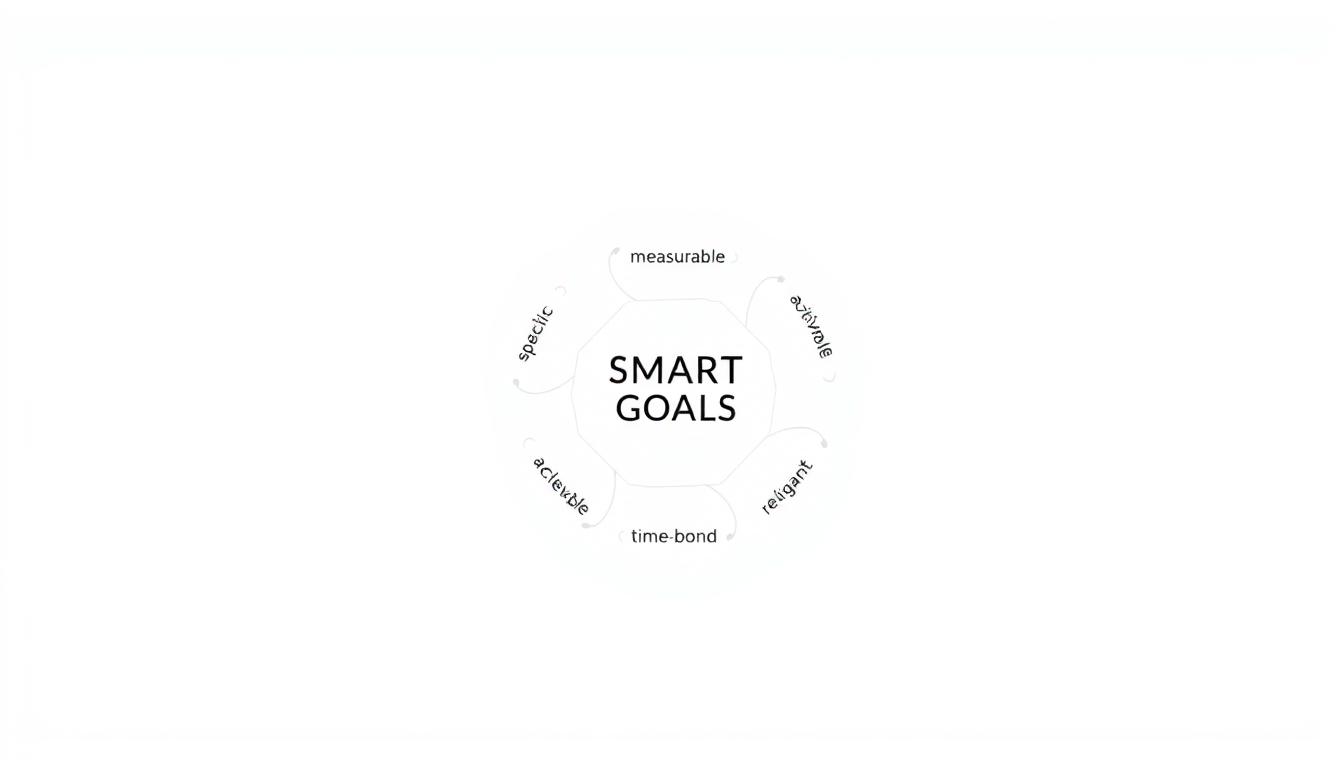
The framework’s power comes from its five non-negotiable criteria:
- Specific: Define exact outcomes (“Increase Q3 sales by 15%” beats “Boost revenue”)
- Measurable: Use quantifiable metrics to track progress
- Achievable: Match ambitions to available resources
- Relevant: Align with broader priorities
- Time-Bound: Set fixed deadlines
The Benefits of Using Structured Criteria
Teams using this system report 37% fewer miscommunications according to Workplace Insights. Concrete parameters create shared understanding across departments. They also:
- Reduce time spent debating priorities
- Expose resource gaps during planning phases
- Allow objective progress assessments
“What gets measured gets improved—but only if you measure the right things.”
This method works because it forces clarity. Instead of assuming everyone defines success the same way, you create a unified playbook. Deadlines become motivators rather than stressors when paired with realistic milestones.
Breaking Down Each SMART Component
Effective planning requires understanding what makes targets work. Like building bridges, each structural element supports the whole system. Let’s explore the framework’s core parts through real-world lenses.
Specific and Measurable: Defining Clear Outcomes
Vague intentions like “boost productivity” crumble under scrutiny. Strong objectives answer three questions:
- What exactly needs changing? (Reduce customer wait times)
- Who owns the process? (Support team leads)
- How will progress be tracked? (Weekly response time reports)
Quantifiable metrics transform hopes into action. A sales team might aim for “15% more qualified leads by November” instead of “better outreach.” Numbers create accountability.
Achievable, Relevant, and Time-Bound: Setting Realistic Benchmarks
Ambition needs grounding. Before committing to targets, ask:
- Do we have resources? (Budget, staff, tools)
- Does this align with bigger priorities? (Company’s annual focus)
- What’s the final deadline? (Q4 board meeting)
“Unanchored timelines breed complacency. Fixed dates turn ‘someday’ into ‘Tuesday.'”
Regular checkpoints help teams stay motivated. Celebrate hitting monthly milestones while keeping eyes on the quarterly prize. This balance prevents burnout and keeps efforts focused.
smart goals how to – A Step-by-Step Guide
Turning ideas into results requires more than enthusiasm—it needs a clear path forward. Let’s explore a proven method for building actionable plans that deliver consistent outcomes.
Establishing Your Objective
Start with your raw ambition. “Improve customer support” becomes powerful when refined:
- Define success: “Reduce average response time to under 2 hours”
- Identify stakeholders: Support team leads + IT department
- Clarify purpose: “Enhance client retention through faster resolutions”
Incorporating Structured Criteria
Transform your draft using this six-phase approach:
- Initial concept: “Boost website traffic”
- Specific: “Increase organic search visitors by 25%”
- Measurable: “Track weekly Google Analytics reports”
- Achievable: “Allocate $500/month for SEO tools”
- Relevant: “Align with Q4 marketing priorities”
- Time-bound: “Complete by March 15th”
“The magic happens when you convert ‘should’ into ‘will’—specific actions with clear owners.”
Using Templates to Get Started
Accelerate your planning with adaptable frameworks:
- Start with fill-in-the-blank statements
- Include progress tracking columns
- Add resource allocation sections
Popular templates often feature checkpoints for team alignment and budget reviews. Customize these tools to match your unique needs while maintaining core structural elements.
Real-World Examples and Templates
Seeing structured plans in action makes their value clear. Let’s explore how different groups turn ambitions into trackable results using adaptable frameworks.
Case Study: Jane’s Experience at Techfirm, Inc.
Jane faced a common challenge: her company wanted more mobile app users. She transformed “increase usage” into a winning strategy:
- Specific: Add 1,000 monthly users by March 2022
- Measurable: Track app downloads and active sessions
- Action Plan: Optimize app store listings + launch social media campaigns
Her team reviewed progress weekly. By Q1’s end, they hit 1,200 new users—a 20% overshoot. Clear metrics helped adjust tactics when Instagram ads underperformed.
Examples from Business, Personal, and Team Goals
This approach works across industries. Compare these scenarios:
| Category | Initial Idea | Refined Plan |
|---|---|---|
| Marketing Team | “Create more content” | “Publish 3 video tutorials monthly for six months” |
| Fitness Goal | “Get in shape” | “Complete half-marathon training in 14 weeks” |
| Nonprofit | “Help students” | “Provide 100 tutoring hours by December” |
Notice how each example specifies what, how much, and by when. This clarity helps teams allocate resources and measure success without guesswork.
Tracking Progress and Measuring Success
Nearly half of businesses struggle with visibility into their objectives. Our data shows 53% rely on email chains, 36% use spreadsheets, and 31% track through meetings. These methods often leave gaps in accountability.
Setting Milestones and Benchmarks
Break large objectives into weekly checkpoints. A marketing team might set:
- 15% content creation progress by Friday
- 30% client feedback incorporated by Week 3
- Full draft ready for review at Day 21
Benchmarks help teams spot trends. If your design team normally completes wireframes in 10 days, a 15-day delay signals resource issues.
Tools and Techniques for Monitoring Progress
Choose tracking systems that match your workflow:
- Small teams: Shared calendars with color-coded deadlines
- Complex projects: Platforms like Trello for task dependencies
- Remote groups: Automated dashboards showing real-time metrics
“Weekly 15-minute syncs prevent month-long detours. Catch course corrections early.”
Balance thoroughness with efficiency. Daily updates waste time—focus on key metrics that directly impact outcomes. Review systems quarterly to eliminate redundant reporting.
Common Pitfalls and How to Avoid Them
Even well-planned strategies can stumble when teams focus too narrowly on checkboxes. Structured frameworks work best when balanced with adaptability—like using guardrails instead of locked steering wheels.
Balancing Precision with Flexibility
Many groups fall into the “metric trap”—chasing numbers while missing larger opportunities. A sales team might hit lead targets but ignore customer satisfaction drops. Regular strategy reviews help maintain perspective.
Smaller teams often benefit from simplified tracking. Instead of expensive tools, try:
- Weekly 5-minute progress huddles
- Shared spreadsheets with key metrics
- Visual progress boards using sticky notes
“Rigid systems breed robotic thinking. Leave breathing room for breakthroughs.”
Watch for warning signs like declining team morale or missed market shifts. These suggest your criteria might need adjustment. If every discussion revolves around deadlines rather than outcomes, recalibrate.
Resource constraints require creative solutions. A startup aiming for 10,000 users could track weekly sign-ups through free analytics tools. Pair measurable targets with monthly “big picture” reviews to maintain strategic alignment.
Applying SMART Goals Across Teams and Projects
Teams that see their role in company success work 47% harder. Connecting daily tasks to big-picture outcomes creates shared purpose. This alignment turns separate efforts into synchronized progress.
Connecting Dots Between Departments
Start by mapping team objectives to organizational priorities. For example:
- Marketing: “Generate 500 qualified leads by Q3” supports revenue growth targets
- Product: “Launch 2 customer-requested features by December” aligns with retention goals
Asana’s 70% achievement rate shows the power of realistic targets. Their teams set challenging but possible benchmarks through cross-department input.
| Department | Team Objective | Company Alignment |
|---|---|---|
| Sales | Close 15 enterprise deals | Supports 20% revenue increase |
| Customer Support | Reduce ticket time by 25% | Improves client retention metrics |
| Engineering | Deploy 3 security updates | Meets compliance roadmap |
“Our weekly alignment checklists cut duplicate work by 60%. Now teams see how their pieces fit the puzzle.”
Regular syncs keep projects on track. Share progress dashboards company-wide to maintain transparency. Celebrate milestones that advance multiple priorities at once.
Conclusion
Clear targets create shared understanding across teams. When everyone knows exactly what needs achieving, energy flows toward meaningful actions. Structured frameworks turn abstract ideas into step-by-step plans with built-in checkpoints.
This approach saves time in the long run. Early alignment prevents mid-project confusion about priorities or deadlines. Teams using measurable benchmarks report 42% fewer wasted hours according to recent workplace studies.
While detailed planning requires upfront effort, the payoff comes through consistent progress. Celebrate each milestone reached—these small wins build momentum toward larger victories. Regular reviews keep efforts focused without sacrificing adaptability.
The true value lies in transformed mindsets. Members start asking better questions: “What’s our next measurable step?” instead of “Are we done yet?” That shift alone can elevate entire organizations.