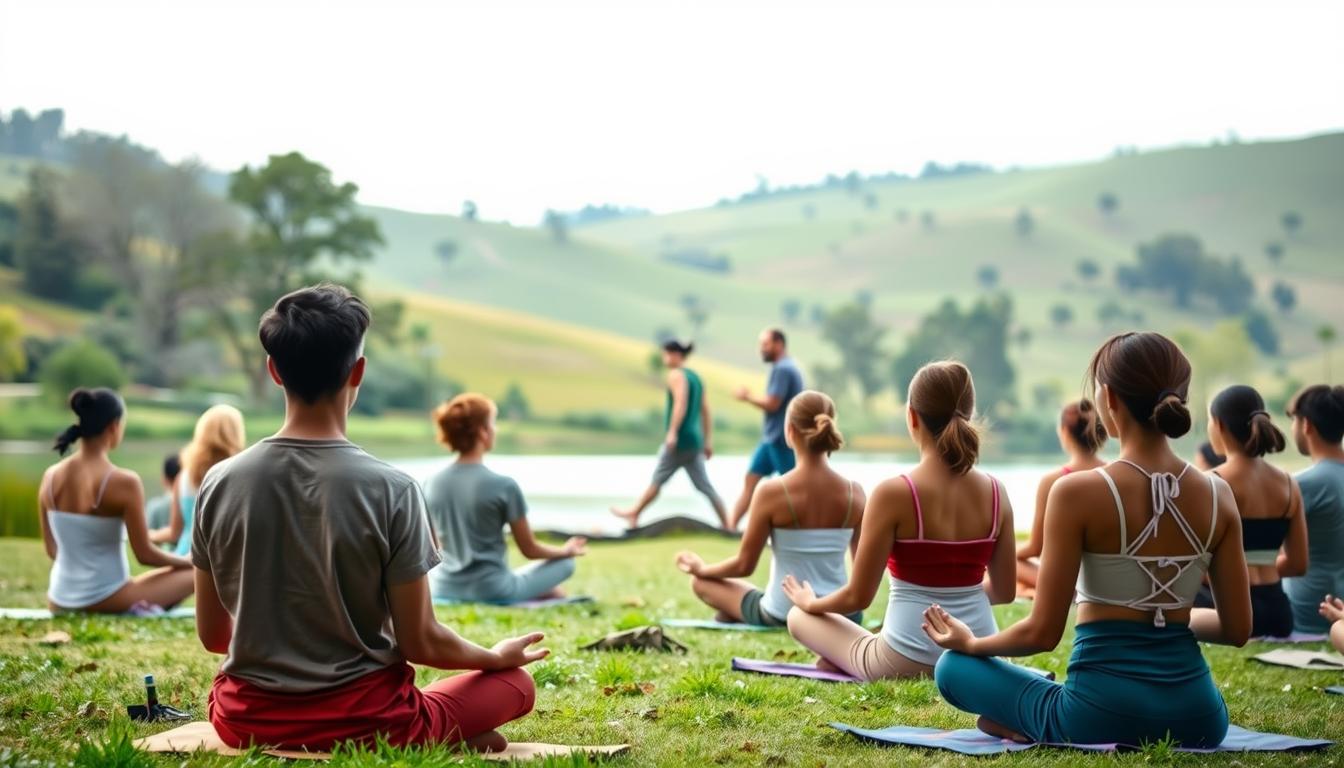
In today’s fast-paced world, finding calm has never felt more essential. More people are turning to practices that ground them in the present moment to ease tension and manage overwhelming emotions. Research shows these techniques can help create mental clarity and improve emotional resilience over time.
Unlike complex wellness routines, these methods focus on observing thoughts without judgment. The Mayo Clinic describes this approach as tuning into your senses and emotions as they happen. It’s not about emptying your mind but building a kinder relationship with your thoughts.
Studies highlight how consistent practice can lower stress hormones and soften anxiety’s grip. Best of all, you don’t need hours of free time or special equipment. Even brief moments of intentional awareness during daily tasks—like sipping tea or walking—can make a difference.
This guide focuses on accessible strategies designed for those new to self-reflection. You’ll learn how to start small, avoid frustration, and create habits that fit naturally into your routine. Let’s explore how gentle, present-moment focus can become your anchor in chaotic days.
Key Takeaways
- Present-moment awareness helps reduce stress and improve emotional balance
- Requires no special skills or equipment to begin
- Supported by medical research for anxiety management
- Easily integrated into everyday activities
- Focuses on observation rather than perfection
Understanding Mindfulness and Its Benefits
Many assume mindfulness means emptying your head completely. In reality, it’s about noticing life as it unfolds. This practice invites you to engage with your current experience—whether pleasant or challenging—with curiosity rather than criticism.
What Is Mindfulness?
At its core, mindfulness means observing your moment-to-moment reality without trying to edit it. Andy Hobson, a meditation instructor, compares it to “watching clouds pass in the sky—you acknowledge their presence without chasing or resisting them.”
Rooted in ancient Buddhist teachings, this approach gained modern traction through Dr. Jon Kabat-Zinn’s work. His Mindfulness-Based Stress Reduction program showed how focusing on the now could help hospital patients manage chronic pain. Today, it’s used in schools, workplaces, and therapy sessions worldwide.
The Science Behind Mindfulness
Studies reveal fascinating brain changes in regular practitioners. MRI scans show increased gray matter in areas governing emotional regulation and decision-making. Simultaneously, activity decreases in the amygdala—the brain’s panic button for stress responses.
Consider these findings:
- A 2011 Harvard study found 8 weeks of practice reduced amygdala size by 5%
- Regular meditation strengthens neural pathways for attention control
- Blood pressure improvements match those seen with lifestyle changes
As researcher Sara Lazar notes: “Mindfulness isn’t just psychological—it physically reshapes how we process challenges.” This blend of ancient wisdom and modern neuroscience makes it a powerful tool for navigating today’s complexities.
Why Embrace Mindfulness in Your Daily Life
Mindfulness isn’t just a trend—it’s a science-backed tool for creating lasting positive change. By weaving simple awareness practices into your routine, you can transform how you respond to challenges while cultivating inner calm.
Stress Reduction and Improved Mental Clarity
When stress hormones flood your system, mindfulness acts like a natural reset button. Studies show it activates the parasympathetic nervous system, helping your body shift from panic mode to peaceful alertness. This biological change lowers heart rate and blood pressure within minutes.
Regular practice teaches your brain to anchor itself in the now. Instead of replaying yesterday’s mistakes or worrying about tomorrow’s deadlines, you learn to engage fully with what’s happening. This mental training strengthens focus—a skill that spills over into work projects and personal relationships.
Consider these science-backed advantages:
- Cortisol levels drop by 14-25% after 8 weeks of consistent practice
- Decision-making improves as emotional reactivity decreases
- Daily frustrations feel manageable rather than overwhelming
As neurologist Dr. Richard Davidson notes: “Mindfulness creates structural changes in the brain that support emotional balance.” These adaptations help you respond thoughtfully to stressors instead of reacting impulsively. Over time, this builds resilience that protects both mental and physical health.
10 beginnerfriendly mindfulness exercises
Starting a self-awareness journey doesn’t demand perfection—just curiosity. The techniques below act like friendly guides, helping you reconnect with the here and now through ordinary moments.
Effortless Techniques for Everyday Life
These approaches work like mental reset buttons. They fit seamlessly into existing habits—while brushing your teeth, waiting in line, or during work breaks. Consistency matters more than duration—even 90-second pauses create ripple effects.
Explore this starter toolkit:
| Technique | Time Needed | Focus Area |
|---|---|---|
| Breath Anchoring | 1-3 minutes | Calming Overwhelm |
| Sensory Check-In | 2 minutes | Environmental Awareness |
| Gratitude Pause | 90 seconds | Positive Reframing |
Notice how each method addresses different needs? This variety prevents boredom while strengthening various aspects of awareness. Pro tip: Pair specific practices with daily triggers—like checking email or washing dishes—to build natural consistency.
Research from UC Berkeley reveals that those who experiment with multiple techniques are 60% more likely to maintain their routine. Your personal favorites will emerge as you explore, creating a custom toolkit for life’s ups and downs.
Mindful Breathing: A Gateway to Presence
Breathing becomes more than automatic when used intentionally. Andy Hobson, a meditation coach, calls it “your built-in reset button for chaotic moments.” This foundational practice transforms an unconscious act into a conscious anchor for daily life.
Why does focusing on air moving through your nostrils work so well? It taps into your body’s natural calming mechanisms. As Hobson explains: “You’re already breathing—why not make it count?” This approach requires no special skills, just willingness to notice.
Steps to Practice Mindful Breathing
- Choose a comfortable position—sit upright or lie flat
- Close your eyes and take one deep breath through your nose
- Exhale slowly through pursed lips like blowing out candles
- Notice chest movements without trying to control them
- When thoughts arise, gently bring focus back to breath flow
This pattern activates your relaxation response within 90 seconds. Research shows it lowers heart rate and oxygenates blood more effectively than shallow chest breathing. The magic lies in the present moment focus—each inhale grounds you, each exhale releases tension.
Keep sessions short initially. Three minutes daily builds consistency better than hour-long attempts. Use waiting moments—traffic lights, app loading screens—to practice. Over time, this creates mental space between stimuli and reactions, helping you respond calmly under pressure.
Embracing Body Scan Meditation
Your body holds wisdom often drowned out by daily noise. Body scan meditation offers a direct line to this inner intelligence through systematic physical awareness. As Insight Timer teacher Karim Rushdy notes:
“The body waits patiently to anchor us in the present. Making peace with its sensations reduces stored emotional tension.”
Discovering Your Physical Landscape
This practice guides you to explore sensations from toes to scalp. Start by choosing a quiet space where you can sit or lie comfortably. Unlike sleep-focused relaxation, you maintain gentle alertness while scanning each area.
Begin at your feet. Notice temperature, pressure, or tingling without labeling sensations as good/bad. Move upward through calves, thighs, and torso at your own pace. Many discover unexpected tension pockets in shoulders or jaws during this process.
| Position | Best For | Tips |
|---|---|---|
| Lie Down | Evening Practice | Use a yoga mat to stay alert |
| Sit Up | Daytime Focus | Support spine with cushion |
| Reclined Chair | Physical Limitations | Keep knees slightly bent |
Scanning teaches curious observation rather than quick fixes. If you find stiffness, simply note its presence. Research shows this non-judgmental approach helps reframe discomfort over time. One UCLA study found 6 weeks of practice reduced stress-related inflammation by 17%.
Regular scans build body literacy—you’ll recognize stress signals earlier. This awareness creates space between triggers and reactions. With patience, you’ll cultivate compassion for your physical experiences while strengthening mental resilience.
Engaging Your Senses: The Five Senses Exercise
Your senses act as immediate anchors to reality when thoughts race. The 5-4-3-2-1 technique offers a structured way to reconnect with your surroundings through deliberate observation. Harvard psychologist Dr. Ellen Langer explains: “Sensory awareness breaks autopilot thinking by forcing engagement with tangible details.”
Here’s how it works:
| Sense | Quantity | Example |
|---|---|---|
| Sight | 5 objects | Notice wall textures or leaf patterns |
| Sound | 4 noises | Identify distant chatter or AC hum |
| Touch | 3 textures | Feel chair fabric or breeze on skin |
Start by naming five visual elements around you—a coffee mug’s chip, sunlight patterns, or book spine colors. Next, listen for four distinct sounds, from obvious voices to subtle clock ticks. Then explore three tactile sensations like carpet fibers or jewelry weight.
Breathe deeply to catch two scents—maybe printer ink or fresh-cut grass. Finally, focus on one taste sensation, even if it’s just residual mint from toothpaste. This sequence redirects mental energy from worries to physical reality.
Neuroscience shows this method reduces anxiety spikes by 34% within three minutes. Why? It activates the parietal lobe, which processes sensory input, while quieting the amygdala’s stress signals. Regular practice builds your ability to shift focus during overwhelming moments.
Incorporating Mindful Walking and Eating
Daily routines hold hidden opportunities to reconnect with your surroundings. By approaching ordinary actions with fresh awareness, you transform mundane moments into pockets of presence that refresh your perspective.
Walking Meditation for On-the-Go Awareness
Turn your next stroll into a moving meditation. Notice how your feet meet the ground—the roll from heel to toe, shifts in balance. Sync your breathing with steps: inhale for three paces, exhale for four. This simple rhythm anchors your mind while boosting circulation.
Urban environments become rich sensory playgrounds. Observe sunlight patterns on buildings or the rhythm of distant traffic. Research shows 10 minutes of walking meditation daily reduces mental fatigue by 22%.
Mindful Eating for a Nourishing Experience
Mealtimes offer perfect chances to slow down. Before biting, pause to appreciate colors and aromas. Chew slowly, noticing how flavors evolve. Place utensils down between bites to savor textures fully.
This practice helps your body register fullness cues accurately. A Cornell University study found participants who ate mindfully consumed 20% fewer calories while feeling more satisfied. It’s not dieting—it’s rediscovering joy in nourishment.